Introduction to nuclear energy
In the late 1930s, we discovered that some particularly large atoms found in nature can be split into two, releasing a shocking amount of energy as heat. Because the energy emerges from the atomic nucleus, we call it nuclear energy.
When these atoms are arranged properly in a machine called a nuclear reactor, each splitting nucleus can induce its neighbors to split in turn, creating a controlled chain reaction. Reactors can convert the released nuclear heat into electricity, shaft horsepower (to power ships), building heating, desalinated water, hydrogen, and many other things useful to human civilization.
Today, about 430 commercial nuclear power plants worldwide produce around 400 GW of electricity, enough to power 400 million average households. About one-fifth of the USA’s electricity comes from nuclear power, which represents about half of the country’s zero-carbon electricity.
Nuclear energy is controversial due to concerns about radiation. Public support varies geographically and over time, but as of 2023, polls show that a majority of people support expanding nuclear power.
What are the key capabilities of nuclear energy?
(Click on each of the headings for more details.)
| Material | Energy Density (MJ/kg) | 100W light bulb time (1kg) |
|---|---|---|
| Wood | 10 | 1.2 days |
| Ethanol | 26.8 | 3.1 days |
| Coal | 32.5 | 3.8 days |
| Crude oil | 41.9 | 4.8 days |
| Diesel | 45.8 | 5.3 days |
| Natural Uranium (LWR) | 5.7x10⁵ | 182 years |
| Reactor Grade Uranium (LWR) | 3.7x10⁶ | 1,171 years |
| Natural Uranium (breeder) | 8.1x10⁷ | 25,700 years |
| Thorium (breeder) | 7.9x10⁷ | 25,300 years |
Energy densities of various energy sources in MJ/kg and in length of time that 1 kg of each material could run a 100W load. Natural uranium has undergone no enrichment (0.7% U-235), reactor-grade uranium has 5% U-235. By the way, 1 kg of weapons grade uranium (95% U-235) could power the entire USA for 177 seconds. All numbers assume 100% thermal-to-electrical conversion. See our energy density of nuclear fuel page for details.
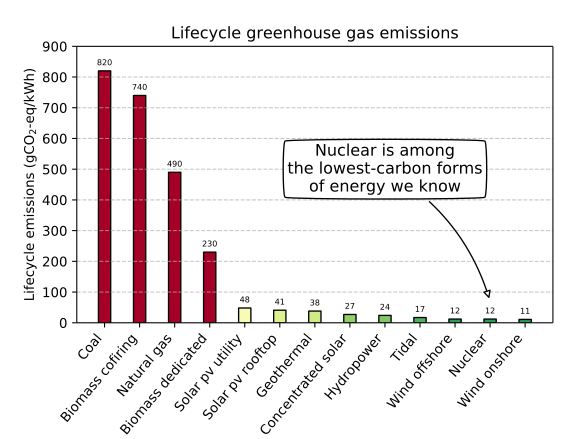
Splitting atoms is a carbon-free process, so nuclear power is a global solution to climate change. While some processes in the overall lifecycle are currently carbon-emitting, the net result is that nuclear is nearly as low-carbon as you can get. Once we electrify construction and mining equipment and power it all with nuclear and other zero-carbon processes, the overall carbon will trend to zero.

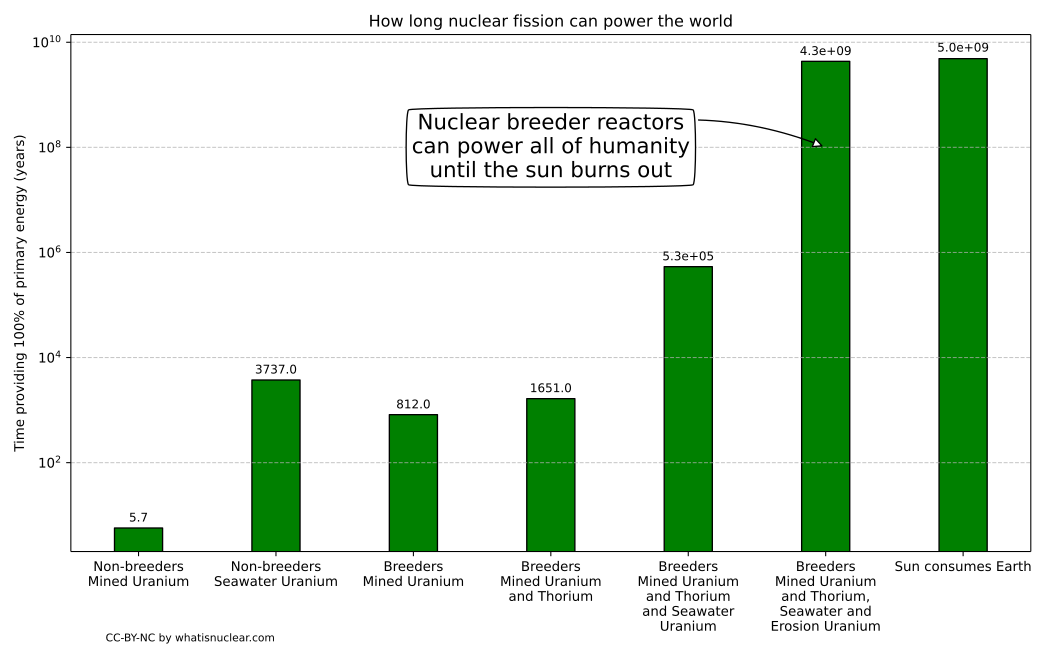
We have enough nuclear fuel resources to power the world for literally billions of years with advanced reactors. Even with conventional reactors, peak uranium is far off.
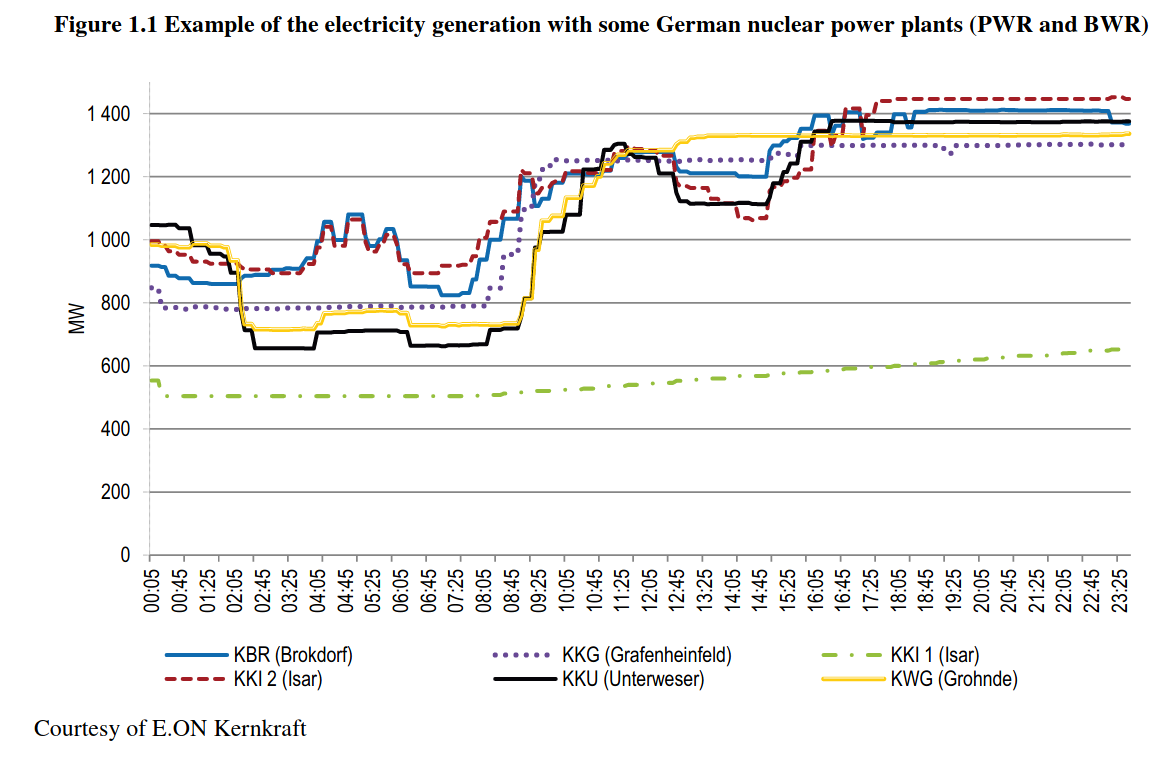
Humans use a lot of energy, and we’re using more every day. Between 2000 and 2010, the world total energy consumption rose by an astounding 29% [1]. Choices about our consumption of energy are fundamental to the primary geopolitical and environmental struggles of our day. Nuclear energy is a strong candidate for supplying our energy while alleviating these struggles.
What are the downsides of nuclear energy?
Of course nothing’s perfect. Long-standing questions and concerns abound regarding nuclear energy. Click for details.
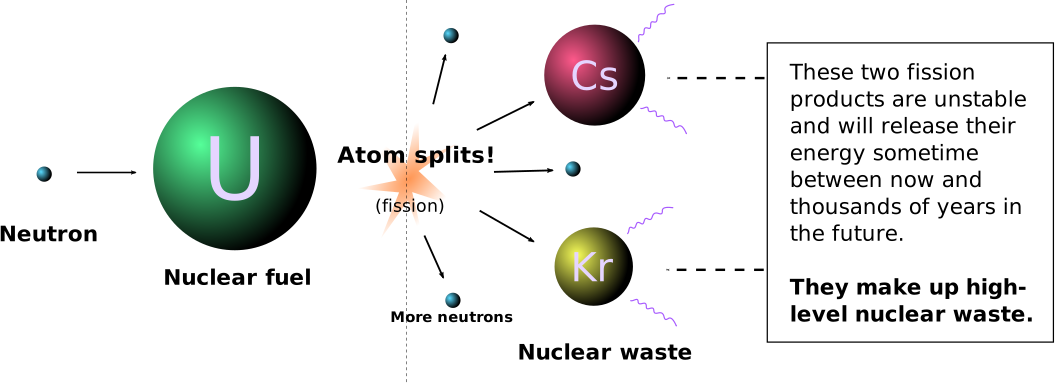
When heavy atoms split and release energy, the two smaller atoms remaining (called fission products) are often left with some extra energy to give off. This energy is released over a period of time (the longest-lived waste lasting 100,000+ years) in the form of energetic particles called radiation. The high radiation is hazardous and must be kept isolated from the biosphere. We have not yet agreed on what should be done with this high-level nuclear waste.
Waste solutions
We know how to deal with nuclear waste safely. The Finns simply chose to go ahead and solve their nuclear waste issue and built the repository at Onkalo. We have good experience with deep geologic disposal in salt deposits that have been stable for 250 million years. Research in deep borehole technology is also looking promising. Finally, if we close the fuel cycle and recycle spent fuel, then it decays to safe levels in several hundred years rather than hundreds of thousands. Furthermore, despite the fear, few people, if any, have ever been injured by stored commercial nuclear waste.
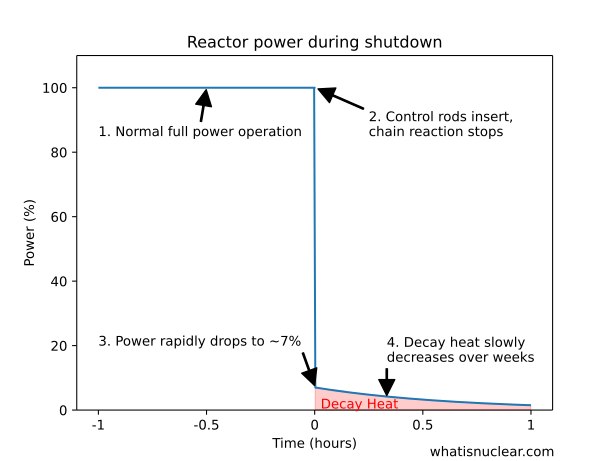
We have a detailed page dedicated to nuclear waste here.The radioactive fission products are hottest when a reactor first shuts down. In effect, you can’t shut a reactor completely off. This decay heat must be cooled or else the containment structures that hold the fuel and waste can breach, releasing radiation into the biosphere. Accidents at Fukushima and Three Mile Island were caused by this effect. Unstable reactor design and operation at Chernobyl led to a power excursion and widespread dispersal of radioactive material. So, people worry about reactor safety.
Safety solutions
Nuclear energy has actually saved over 1.8 million lives by displacing air-pollution related deaths that would have occurred had fossil or biofuel plants been built instead of the clean-air nuclear ones [2]. This includes the health effects of the nuclear accidents. So they’re like airplanes; when one goes down, it is a major disaster and huge story, but when you look at the data, it is clear that nuclear reactors are one of the safest ways known to produce energy. And advanced designs can make them even safer.
Nuclear safety and risk detailsThe first application of fission was as an atomic bomb. While nuclear reactors and atomic bombs are significantly different machines, there is some technology overlap, especially in fuel cycle facilities like enrichment and reprocessing plants. So, some people argue that having reactors around might make it easier to spread nuclear weapons.
Proliferation solutions
It is important for nuclear facilities to monitor nuclear material. That said, advanced designs are being developed that reduce reliance on enrichment. Actually, nuclear reactors are useful for peacefully destroying nuclear weapons, and between the late 1990s and 2013, fully 10% of the US electricity was generated in nuclear reactors using dismantled ex-Soviet nuclear warheads in the Megatons-to-Megawatts program.
Nuclear reactors are generally large and complex, with lots of reinforced concrete and nuclear-grade quality assurance programs. As a result, they tend to be expensive to build. Once they’re built, the fuel and operating costs are relatively cheap, but the capital cost is a major hurdle.
Cost Solutions
If carbon dioxide is ever treated as a pollutant, then nuclear reactors will become much more competitive. But there is definitely room to improve! Research is ongoing in many venues to reduce the cost of nuclear reactors. Countries that chose a standard design and built many of the same have succeeded in bringing costs down.
A nuanced reality
Nuclear fission’s ability to responsibly produce global-scale, 24/7, (nearly) carbon-free energy is unmatched among known technologies.
Next-generation reactor designs exist that can further reduce waste, improve safety, increase proliferation resistance, and reduce costs. Even if someone doesn’t support current nuclear, it is difficult for them to disregard all possible improvements. We humans have made impressive accomplishments before.
Of all the known energy resources, nuclear is perhaps the most passionately debated and least understood. Our goal is to explain what makes some people so excited and supportive, and what makes others so passionately opposed. There are many sides to each story. Let’s explore them deeper.
More intro: A primer on energy, greenhouse
gas, intermittency, and nuclear
Fission and Fusion
There are two fundamental nuclear processes considered for energy production: fission and fusion.
- Fission is the energetic splitting of large atoms such as Uranium or Plutonium into two smaller atoms, called fission products. To split an atom, you have to hit it with a neutron. Several neutrons are also released which can go on to split other nearby atoms, producing a nuclear chain reaction of sustained energy release. This nuclear reaction was the first of the two to be discovered. All commercial nuclear power plants in operation use this reaction to generate heat which they turn into electricity.
- Fusion is the combining of two small atoms such as Hydrogen or Helium to produce heavier atoms and energy. These reactions can release more energy than fission without producing as many radioactive byproducts. Fusion reactions occur in the sun, generally using Hydrogen as fuel and producing Helium as waste (fun fact: Helium was discovered in the sun and named after the Greek Sun God, Helios). This reaction has not been commercially developed yet and is a serious research interest worldwide, due to its promise of nearly limitless, low-pollution, and non-proliferative energy. Read more at our fusion page.
Where to go from here
Take a look at the navigation bar on the top of the page (or click the line-icon if you’re on a small screen). You’ll find information on all sorts of relevant topics. To get started, check out the what is a nuclear reactor? page.
Other highlights include:
Featured Pages
Nuclear Overview Nuclear Reactors Nuclear Waste Reactor Development History Fast Reactors Molten Salt Reactors Thorium Nuclear Fuel Radiation on Airplanes First-hand Chernobyl Memories Fukushima Fish The Age of EarthOur goal
To answer this common sentiment:
"Honestly, my gut feeling is that I’m not in favor of it, but I don't know hardly anything about it."
"I second that."
"Energy is part of a historic process, a substitute for the labor of human beings. As human aspirations develop, so does the demand for and use of energy grow and develop."
References
- International climate objectives will not be met if nuclear power is excluded, according to UNECE report (2021)
- Nuclear Energy Makes History as Final COP28 Agreement Calls for Faster Deployment (2023)
- Kharecha and Hansen, "Prevented Mortality and Greenhouse Gas Emissions from Historical and Projected Nuclear Power," Environ. Sci. Technol., 2013, 47 (9), pp 4889–4895
- Schlomer S., et.al., 2014: Annex III: Technology-specific cost and performance parameters. In: Climate Change 2014: Mitigation of Climate Change. Contribution of Working Group III to the 5th Assessment Report of the IPCC
- Technical and Economic Aspects of Load Following with Nuclear Power Plants (OECD-NEA 2011)